Maxwell.
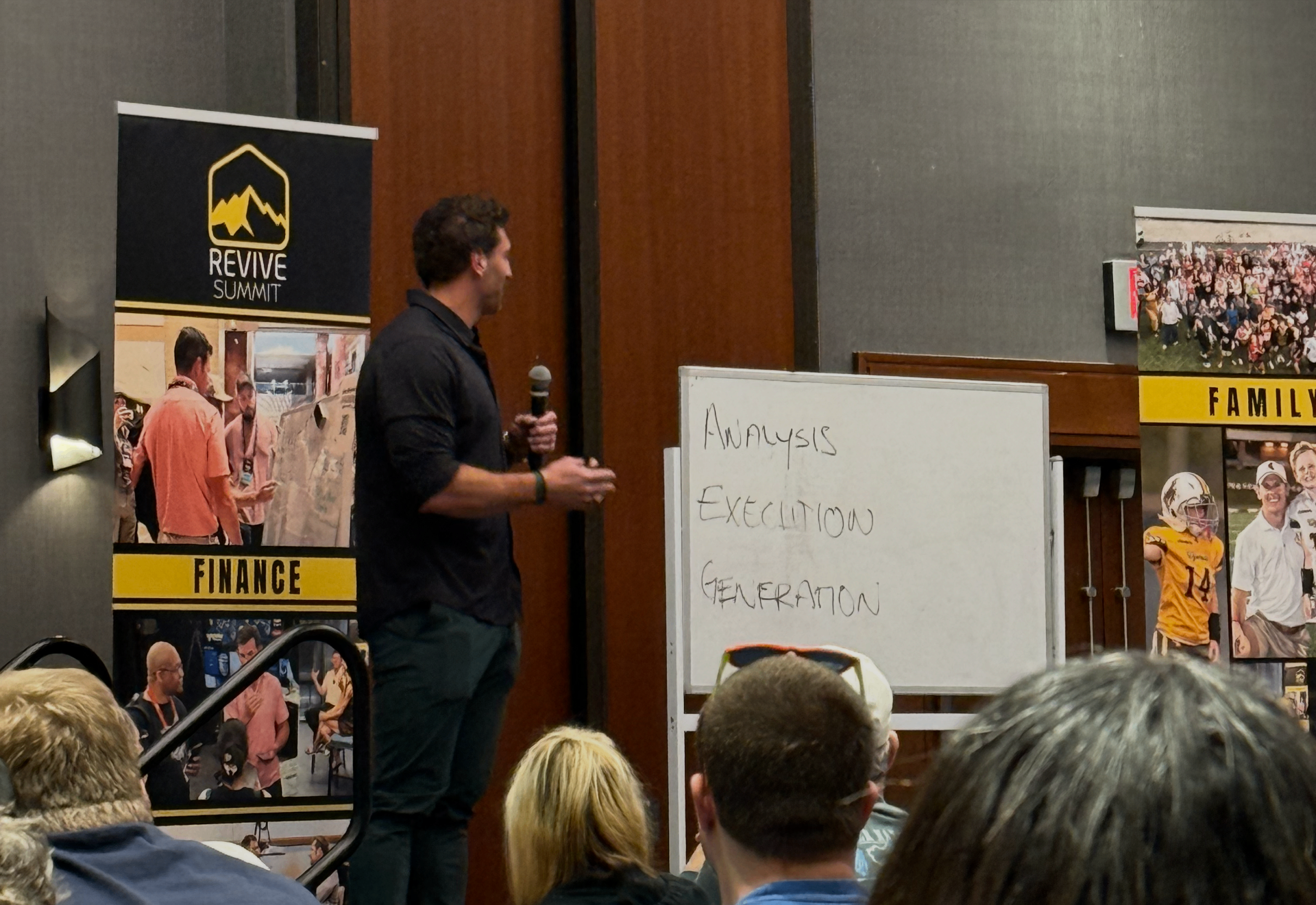
I started in direct response copywriting.
Not because I loved writing. Because I wanted to understand what actually makes people buy. Copy is the cleanest version of that question — there's no funnel, no UX team, no brand strategist hiding behind it. Just words on a page and a conversion rate that tells you, in real time, whether you understood the buyer or not.
I went deep on the canon. Eugene Schwartz on awareness levels. Alen Sultanic on CO-fusion and offer architecture. Todd Brown on the E5 CAMP framework. Ben "The Beast" on belief engineering — the discipline of mapping every belief a buyer has to hold before they can say yes, then installing those beliefs in order.
Belief engineering is what changed me. Once you see persuasion as a sequence of belief installations rather than a stack of "techniques," every page, every email, every offer becomes a system you can engineer instead of guess at. That perspective is what I eventually carried into operations.
Then I started working with Rich Schefren.
Rich runs Strategic Profits. If you've been in this industry more than five minutes, you know the name. I came in as a strategic consultant and copywriter, and stayed because the conversations there are the kind I'd been trying to have for years.
Working with Rich changed how I thought about constraints. He's been operating at the strategic layer of online businesses since before most of today's gurus could spell "funnel," and he sees patterns most people miss because they're staring at the tactical surface. His Business Blueprint methodology was the first time I'd seen someone articulate, with precision, why most businesses get stuck at exactly the revenue levels they get stuck at — and what the unlock actually looks like.
That's where I started building the bridge: belief engineering for the offer, Schefren-grade strategic clarity for the business, and — increasingly — AI for the execution layer underneath both.
I run Acquisition Systems in three of the meanest verticals on the internet.
GLP-1. TRT. Telehealth. These are the verticals where ad accounts get nuked weekly, compliance creep eats your margin, and the difference between a working offer and a dead one is a single line of copy. They're not glamorous. They're the dojo.
Operating in these verticals is what forced me to get serious about AI deployment. You can't out-spend the constraint here. You can't hire your way out. You have to find the actual leverage point and aim systems at it with surgical precision — because the surface tactics that work in normal verticals get punished here.
That's where the AI stack got built. Not as a hobby. As a survival tool.

I wasn't satisfied with anyone else's version of it.
Most AI consultants are reselling tools they've never deployed at scale. Most agencies are using AI to write captions. Most operators have stitched together five SaaS products and called it "our AI stack." Almost nobody has built a real one — one where the systems remember context, retrieve the right knowledge at the right time, and execute against named objectives.
I built mine. Pinecone for vector search and knowledge memory. n8n as the automation backbone. Claude Code for the engineering layer. MCP for the connective tissue. GoHighLevel for the CRM and funnel work. VAPI for voice. I run a three-tier memory architecture across Notion, Pinecone, and Obsidian that I genuinely cannot operate without anymore.
When I prescribe AI in an engagement, it's because I've already shipped that exact pattern in one of my own businesses. Not because I read about it.
The people whose thinking I steal from.
No one builds a methodology in a vacuum. If you've read these people, we'll speak the same language. If you haven't, this is the reading list.
The boring answer is usually the right one.
If your business is stuck, there is almost certainly a single point in the system that's causing it. Find that point and aim everything at it, and the business unsticks. Don't find it, and every tool you buy, every hire you make, every funnel you rebuild is wasted compound.
That isn't a sexy answer. It doesn't fit on a Twitter thread. It doesn't sell a $1,997 course. Which is why almost nobody does it. The constraint is usually somewhere unsexy — fulfillment, onboarding, retention, a single line of code, a single SKU, a single belief in your welcome sequence. Almost never where the team is staring.
My job is to be the person in the room who refuses to optimize the wrong thing. That's the whole offer.
The work I turn down.
- Run your business for you. I'm a consultant and an operator, not your fractional CEO.
- Tell you AI will fix something it won't. If the constraint is operational, I'll say so even when it's not what you wanted to hear.
- Build "AI strategy decks" that sit in a Notion page no one reads. Strategy is moves, not slides.
- Work with founders who want a yes-man. I'm direct. If we can't disagree well, we can't work together.
- Take on more than a small number of operators per quarter. The work is high-touch by design.
If any of this sounds like your kind of trouble, we should talk.
The audit is where it starts. Two weeks inside the machine. Whether or not we keep going after, you walk away with your business's actual constraint named.
Apply for the Audit → Limited to a small number of operators per quarter